

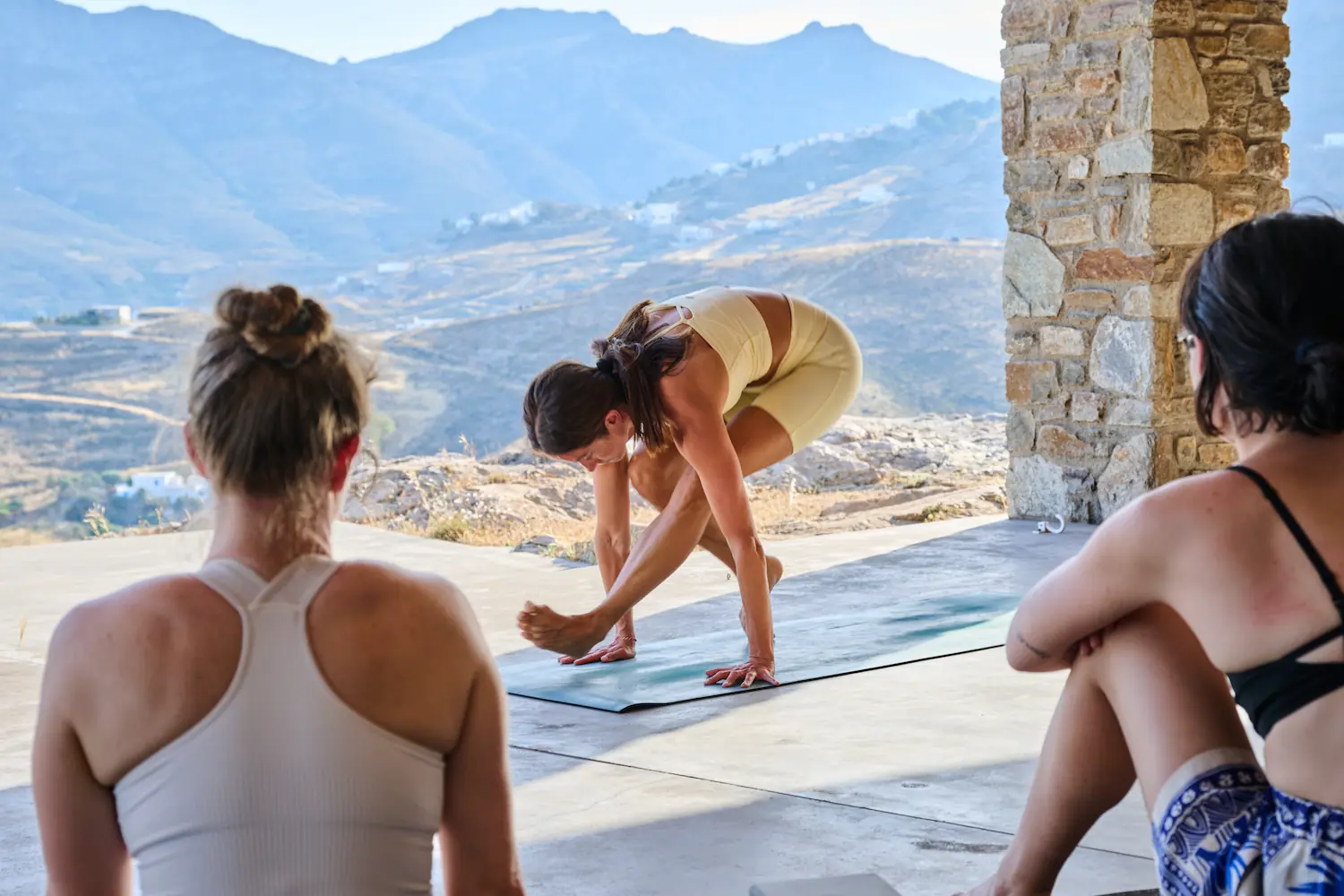
“How can I practice if I only have 15 minutes?”
This is a question that comes up on every retreat, every workshop, and very often in my inbox.
Many practitioners think that they should either do their entire practice or nothing at all. A full practice in the Ashtanga tradition means an entire series or at least the part of the series one practices. In an ideal world, this full practice lasts about 90 minutes and should happen 5 or 6 days per week, before work, school, or any other responsibilities.
But we don’t live in an ideal world. Not everyone can or wants to make asana practice their top priority—at least not every day. Many practitioners end up quitting Ashtanga not out of laziness, or lack of discipline, but because they believe what they can actually do is not enough. They equate “shorter” practice with a “not good enough” practice. This is simply not true. It’s a shame to let go of the treasure this practice holds, just because you cannot dedicate 90 minutes to it daily.
What gives Ashtanga Yoga its true essence is not the number of asanas, or whether or not you practice the entire series every day. The true essence lies in correct breathing and its coordination with movement. In the gazing points. In adhering to the logic and structure of the series and coming up with a shorter or longer version of it that makes sense physically and energetically. In the daily commitment to being present, observing your mind and its patterns, and getting to know yourself better.
Anyone with the willingness to put in the necessary effort can practice daily. The question is how.
Here are some examples of shorter Ashtanga practices that actually work, depending on how much time you have. Times are approximate, since everyone moves and breathes at different paces.
Let’s dive straight into them!
10 min — Surya Namaskar
It might sound short but Surya Namaskar is a complete practice in itself. Not only does it wake up the body and move the spine in different directions, but it also connects you with your breath and establishes the coordination of breath and movement, one of the cornerstones of Ashtanga Yoga.
20 min — Standing sequence (up to Parshvottanasana)
Practicing the standing postures allows you to work on the foundations and add the twisting element, for even more complete spinal work. Remember: foundational postures never get old, and you cannot practice and perfect them enough.
30 min — Standing, and the last 3 poses of the finishing sequence
Here you add the first 2 poses of Primary Series (Utkatasana and Virabhadrasana) and then you sit on the floor to finish with Yoga Mudra, Padmasana and Utpluthih. These final poses allow your nervous system to reset, in the absence of time to do the entire finishing sequence. Don’t forget them!
45 min — Standing, a few seated poses and finishing
45 min should allow you to add a few of the seated postures of Primary—how many depends on your pace but remember it’s not a competition. Make room for the entire finishing sequence here. The longer you practice, the more you need the slowing down that the finishing sequence has to offer.
60 min — A part of seated sequence, backbending and finishing
If you have one hour, you can experiment with leaving out the last few seated asanas of Primary and instead adding backbending before the finishing sequence. It will give you energy and counteract the deep forward folding pattern of the Primary series.
Principles to keep in mind when adjusting your practice to your schedule:
1) Never skip Surya Namaskar. It goes without saying that Surya Namaskar cannot be absent from an Ashtanga practice. It’s the backbone of it. Don’t rush it just to do more asanas. Five rounds of A and three rounds of B are the bare minimum.
2) Order matters. This is why and how the Ashtanga series makes sense. Don’t skip asanas to get faster to the ones you like. Don’t omit the standing sequence to do more seated asanas or the shoulderstand to save time for a headstand. The series simply doesn’t work if you turn it upside down.
3) Give the finishing sequence the attention it deserves. If you practice more than just standing, always make time for finishing sequence to allow your nervous system to relax and reset. Take more breaths, breathe slower and notice any tension and overstimulation fade away.
4) Be smart with backbending. Backbends are stimulating and energizing. They only make sense in a longer practice (at least 45 min) and only if you have time to do the entire finishing sequence afterwards. Don’t let backbends be your last asanas. Your nervous system needs to calm down after so much stimulation.
5) Take rest, always. Give yourself at least 3–5 minutes after practice to lie down with your eyes closed and just relax. If you can stay longer, even better, but don’t skip it, no matter how busy your day is. Rushing your body and mind into your day right after the last asana will eventually backfire by making you agitated and restless in the long run.
PS: These are examples of shorter practices for Primary series practitioners. If you’re interested in similar suggestions for Intermediate or part of it, reach out and I’d be happy to help!


