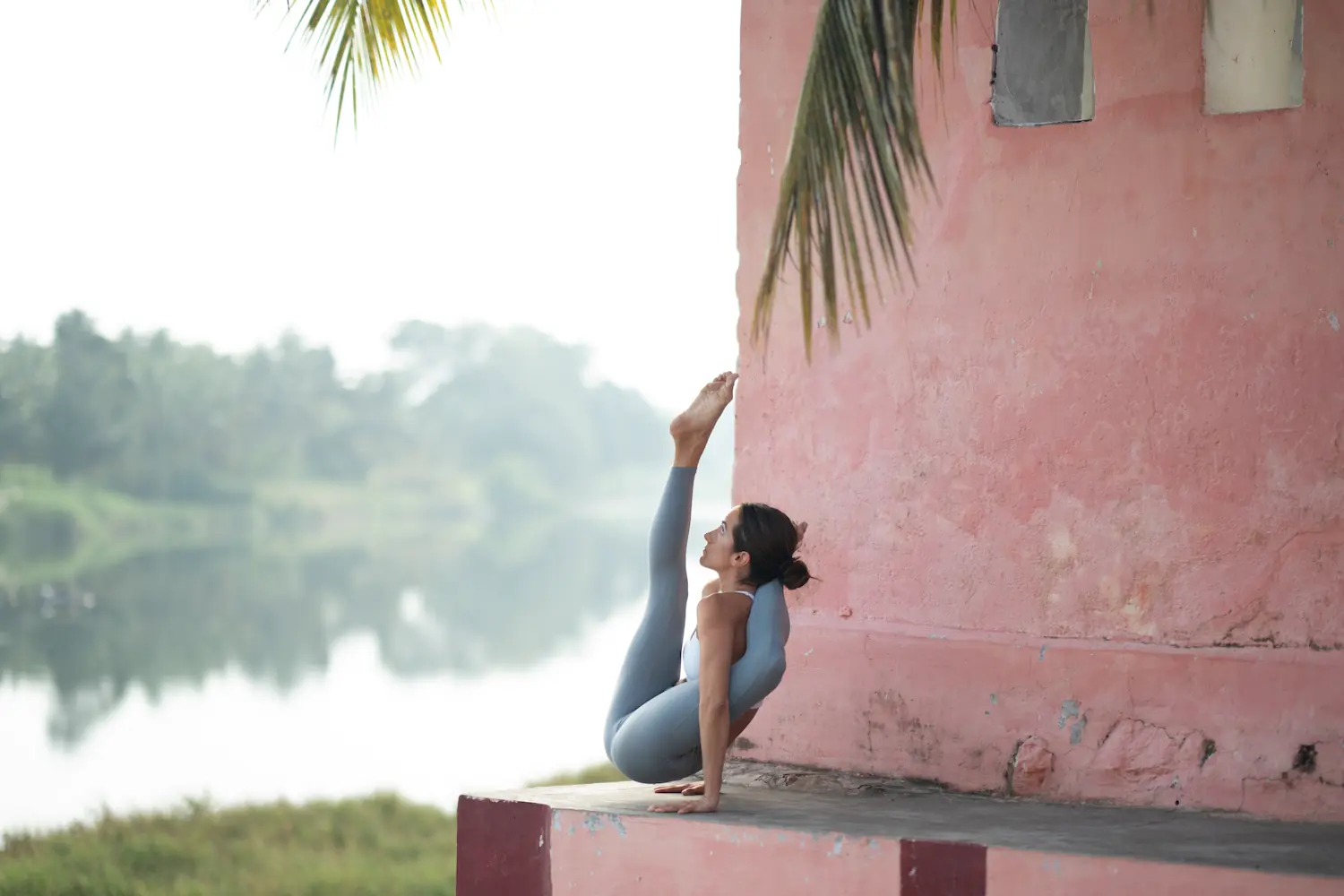
I’ve been a home practitioner for years. Ever since 2017, my yearly trips to Mysore were basically the only times when I had a teacher next to me (that and a few workshops here and there). Although a necessity at the beginning, it quickly became a choice. Once I found my teacher Sharath in Mysore, I didn’t feel the need to have another teacher back home. I would absorb everything I could during the months I was there and then I would return home and do my “homework” for the rest of the year.
I have many online and retreat students who practice mostly alone at home - not necessarily by choice but because they live far from the closest Shala. And let me tell you, they’re thriving.
Don’t get me wrong, having a teacher is not just a blessing; it is necessary. Yoga practice has been passed down from Guru (teacher) to Shishya (student) for thousands of years. But having a teacher does not mean you need them by your side every day. If this is possible, by all means go for it. But if not—and for many people, that’s the case—know that your solo practice is not less legitimate because of that.
Here’s what helped me navigate these moments of sacred solitude over the years. This is what made my practice flourish and grow. I truly hope and believe it will be of great value to you too.
1) Stick to the same practice time every day.
The body loves routine. Having a predictable schedule is great for your circadian rhythm and essential for your whole system to be regulated. Also, if your practice time is more or less the same every day, you’re less likely to quit or find excuses not to do it. Don’t underestimate the power of habit.
2) Forget the all-or-nothing approach.
Do what you can. Even if it’s just 5 minutes. Do it every day and it becomes part of who you are. It doesn’t have to be a “full” practice to be valuable. Remember: your practice is your precious time with your breath, body, and mind. How many asanas you do is less relevant. But if you stick to it daily chances are you will get to do more and more over time.
3) Celebrate your victories.
Not just nailing your struggle asana but also being more focused, more consistent, and more present. This is your fuel to keep going. As a home practitioner no one cheers you on so you have to do it for yourself. Don’t see it as an ego booster—just a sincere thank you to yourself for showing up and doing the hard work.
4) Film yourself.
Not for social media but so you understand your body better by visualizing it. Sometimes we’re convinced we’re doing something in a certain way when in reality we’re doing exactly the opposite. Seeing yourself sometimes shows you what you need to work on, a few bits that you’ve been missing because no one pointed them out. Don’t overdo it with the filming though, use it as a tool, not a distraction.
5) Read Yoga books.
Start with the classics: the Yoga Sutras and the Bhagavad Gita. Read them again and again. There’s so much wisdom in there for several lifetimes. These books literally saved my life years ago when everything around me was falling apart. Ancient wisdom is underrated—rediscover it.
6) Home practice is great but we all need guidance and community sometimes.
If you don’t have a Shala nearby, find a teacher you can visit at least once or twice a year. Many teachers nowadays offer online classes. This is a great way to have someone monitor your practice from anywhere around the world. Otherwise go to retreat, a workshop, or plan a short Yoga trip to visit a teacher who truly inspires you. Ideally stick with one or two teachers. Having too many can lead to confusion and there’s no time to build a deep and meaningful relationship.
7) Manage your expectations.
This is often a problem for students who used to practice at a Shala and then switched to home practice. They tend to think they’re not progressing fast enough. Redefine progress. Focus on the internal aspects of Yoga, not just the shapes. Be honest with yourself as to why you’re practicing in the first place.
8) Accept the plateau.
It always comes for everyone. No exceptions. Usually it follows a period of rapid progress because both the body and mind need some time to readjust and internalize all the changes. Enjoy the sweet feeling of not having anything to prove to anyone (including yourself) for a while. Just do your practice. Progress will come again. I promise.
9) Stop looking for motivation.
Create it. Just get on the mat regardless of how you feel. Make a promise to yourself not to let your fleeting moods and emotions determine how important your spiritual practice is. Did you ever regret having practiced? There, you have your answer.
10) No practice is ever wasted.
Even on days when you feel stiff, heavy and lethargic and when most asanas are a fail. This is when you learn the most about yourself and your infinite capacity for perseverance. This is how you build character and unshakable mental strength.
11) Remember: Yoga as a Sadhana is a solitary practice.
Our teachers, our Gurus are there to shed light on the path, plant the seeds and instil devotion. But ultimately, the path is ours to walk. It is our job to water the seeds so trees can grow. It is our duty toward ourselves and others to dig deep and reconnect with our true self every single day. It is the most rewarding journey I know and I wouldn’t have it any other way.